Designing a Global School Enrollment Experience for GEMS Education
This project focused on redesigning the end-to-end school discovery and enrollment experience, making it more intuitive, scalable, and conversion-driven for a global audience. The redesign improved application completion and enabled better decision-making across the enrollment funnel.
Client
GEMS Education
Timeline
3–4 Months
Role
Product Designer
Collaborators
Dr. Kelley Ginno, Claire Domasz
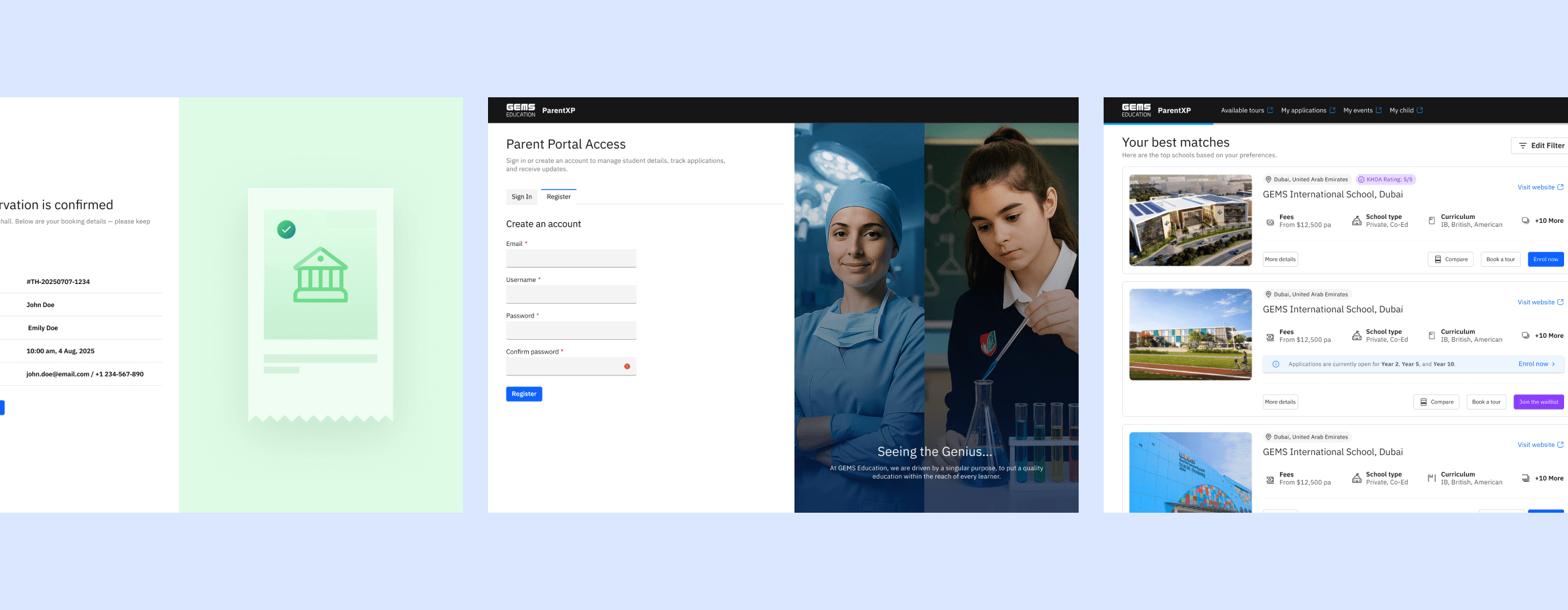
Problem
The first thing I noticed
GEMS Education operates schools across the world. Which means something interesting — every parent, no matter where they're from, eventually lands on the same platform. And that's where things started to feel off. When I explored the existing experience, it felt heavy and overwhelming. The entire process was presented as a single long form, designed to serve all users across regions. Parents had to:
Parents were required to complete long, overwhelming forms
They had to figure out what information was relevant
They were expected to commit before feeling confident in their decision
This led to high drop-offs during the application process, especially in early-to-mid stages.
“It technically worked. But it didn't guide anyone.”
Research & Insights
Research & Insights
I used product understanding, behavioral patterns, and industry practices to guide design decisions.
Long forms significantly increase drop-off rates
Users prefer guided, step-by-step experiences
Decision-making improves when users can compare options side-by-side
Supporting Patterns
Platforms like university portals and SaaS onboarding flows use progressive disclosure
Breaking complex inputs into steps improves completion and engagement
Users
The platform serves a diverse global audience:
Parents
Parents exploring schools for their children
First-time applicant
Navigating unfamiliar school systems, especially in international contexts.
NRIs
International families unfamiliar with local education systems
Existing users
Returning users managing multiple applications
Goal
The objective was to redesign the experience
The objective was to redesign the experience to improve conversion, reduce drop-offs, and support decision-making before application.
Improve conversion across the enrollment funnel
Reduce drop-offs during the application process
Enable better decision-making before commitment
Create a scalable experience for global users
Design Strategy
Rethinking the approach
The goal was not to simplify the system, but to align it with how users naturally make decisions. I stepped back and looked at the journey. Because for a parent, this isn't a form. It's a process:
Discovering Schools
Reduces entry friction and allows users to start with minimal effort
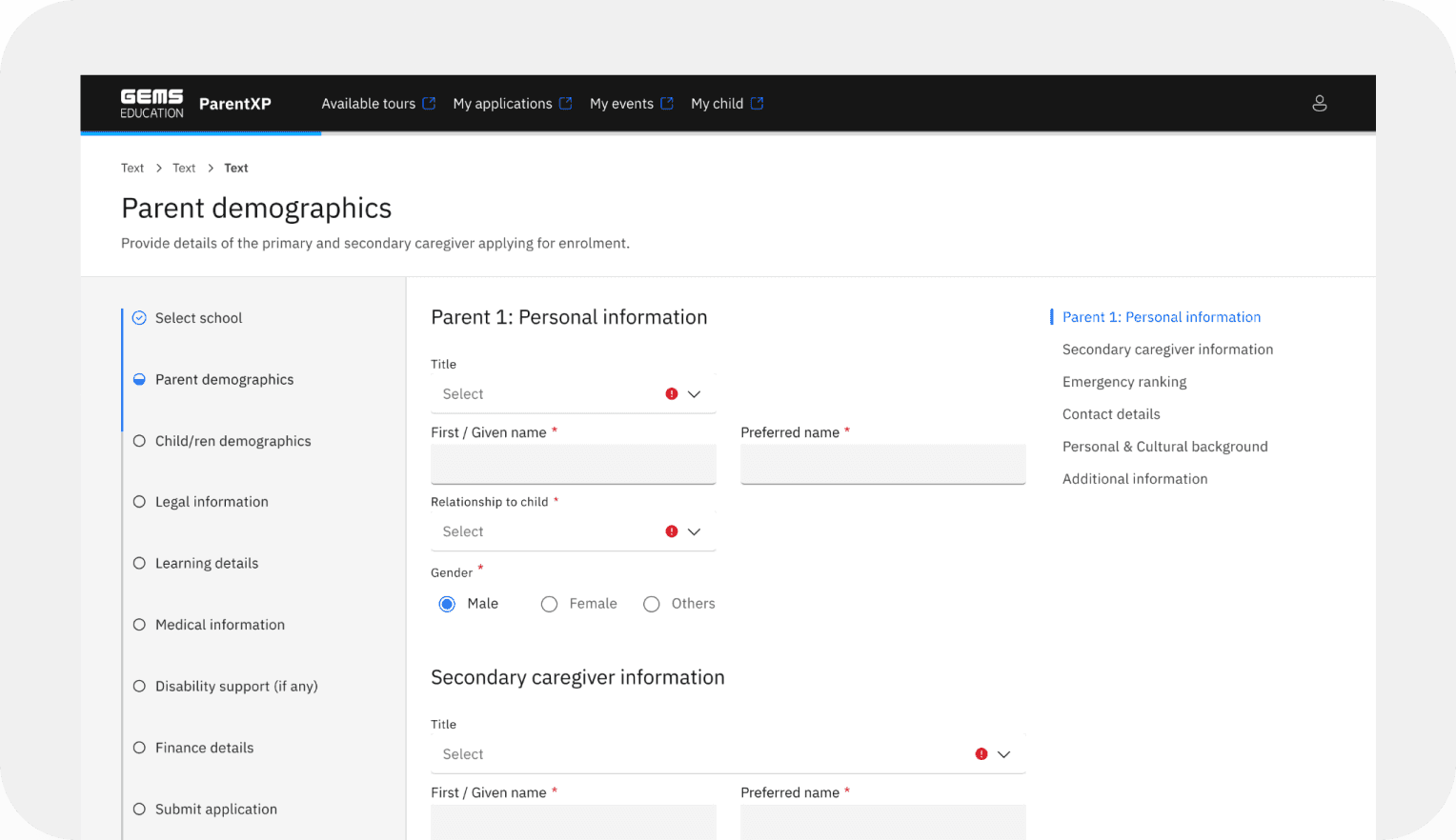
Stepper
Reduces cognitive load and creates a sense of progress
Comparison
Supports informed decision-making without context switching
Building Confidence
Supports informed decision-making without context switching
Dashboard
Provides transparency and reduces uncertainty
Waitlist
Converts drop-off points into lead opportunities
Solution Overview
(Solution Overview)
Shifting from form → journey
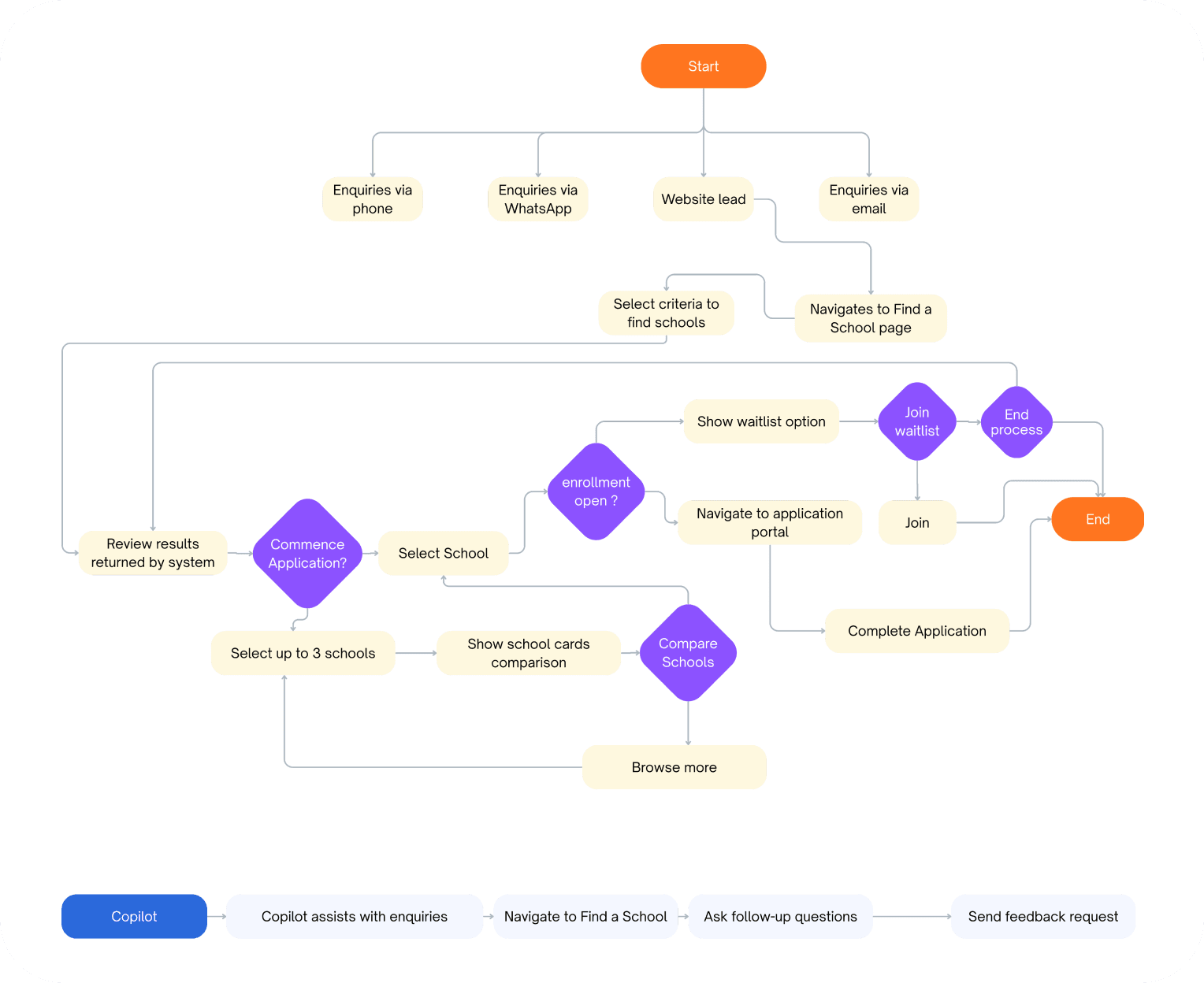
We reframed the experience into something more natural: This transformed the experience from input-driven to decision-driven. Instead of pushing users into a form, we started guiding them through decisions.
Before vs After
Information Architecture
The system shifted from a static form to a guided, progressive journey aligned with user behavior. We reframed the experience into something more natural:
This transformed the experience from input-driven to decision-driven. Instead of pushing users into a form, we started guiding them through decisions.
The Journey
6 steps that changed everything
Step 1
School Discovery
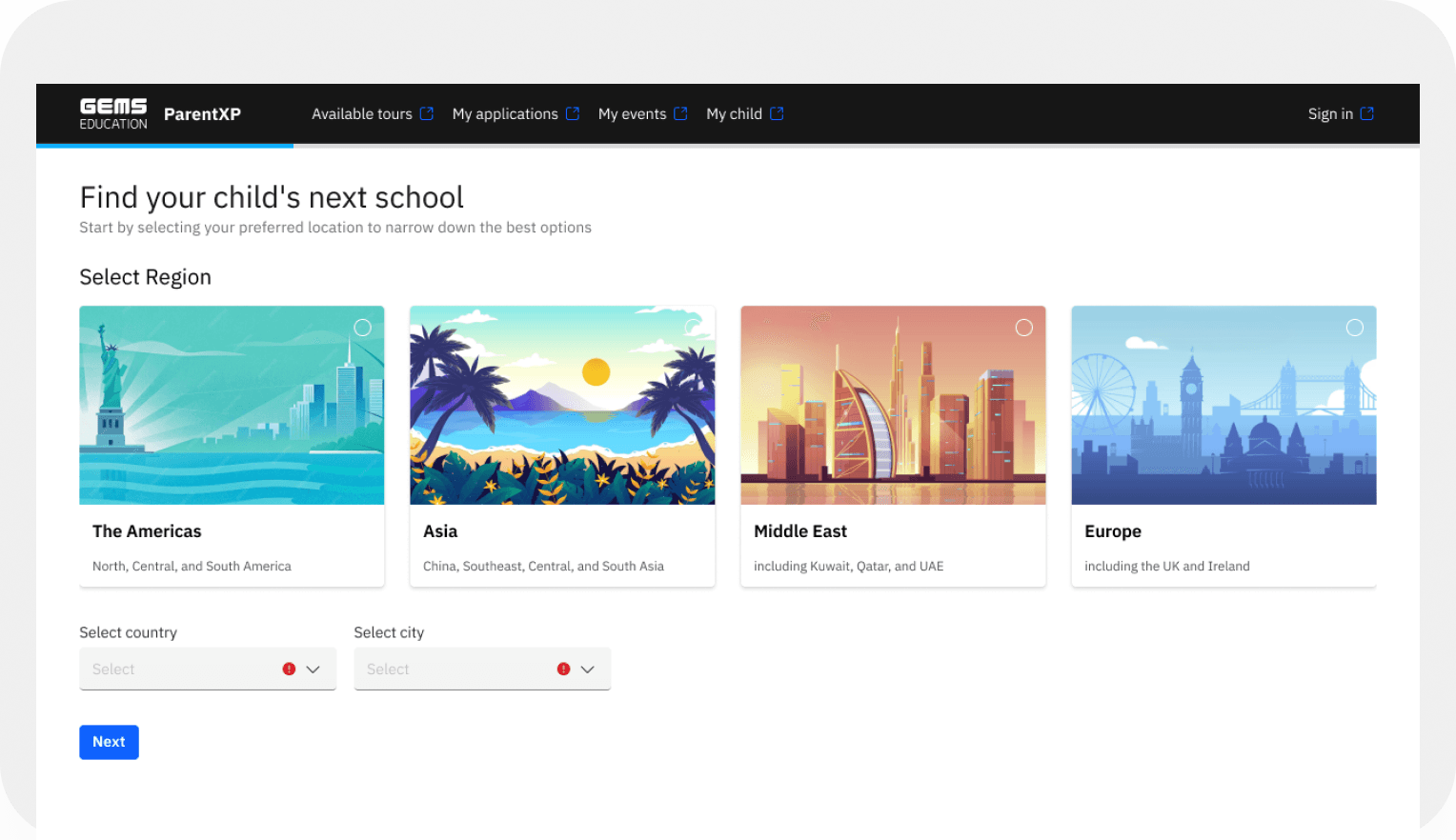
The journey now begins with discovery instead of documentation.
Users start by narrowing down region, country, city, and school preferences before seeing recommendations. That shift makes the experience feel guided, contextual, and far less overwhelming from the first interaction.
“Instead of asking for everything upfront, the system helps users decide one step at a time.”
Step 2
Compare Schools
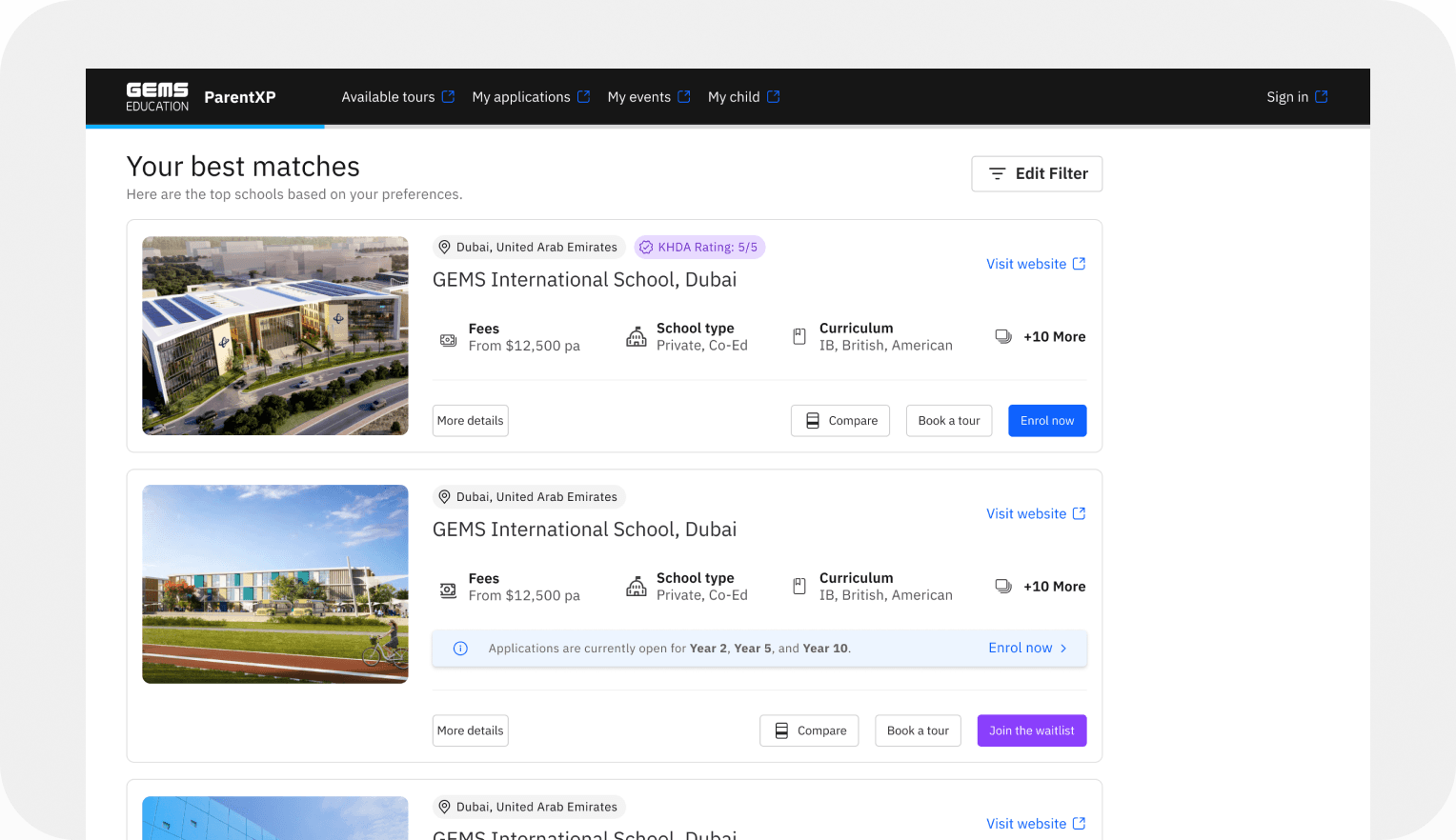
A dedicated comparison view was introduced to support decision-making before commitment.
Parents can review curriculum, fees, facilities, and ratings side by side without jumping across multiple pages. This keeps momentum high while giving families enough context to make a confident choice.
“The comparison layer turns exploration into a clearer decision, not just more browsing.”
Step 3
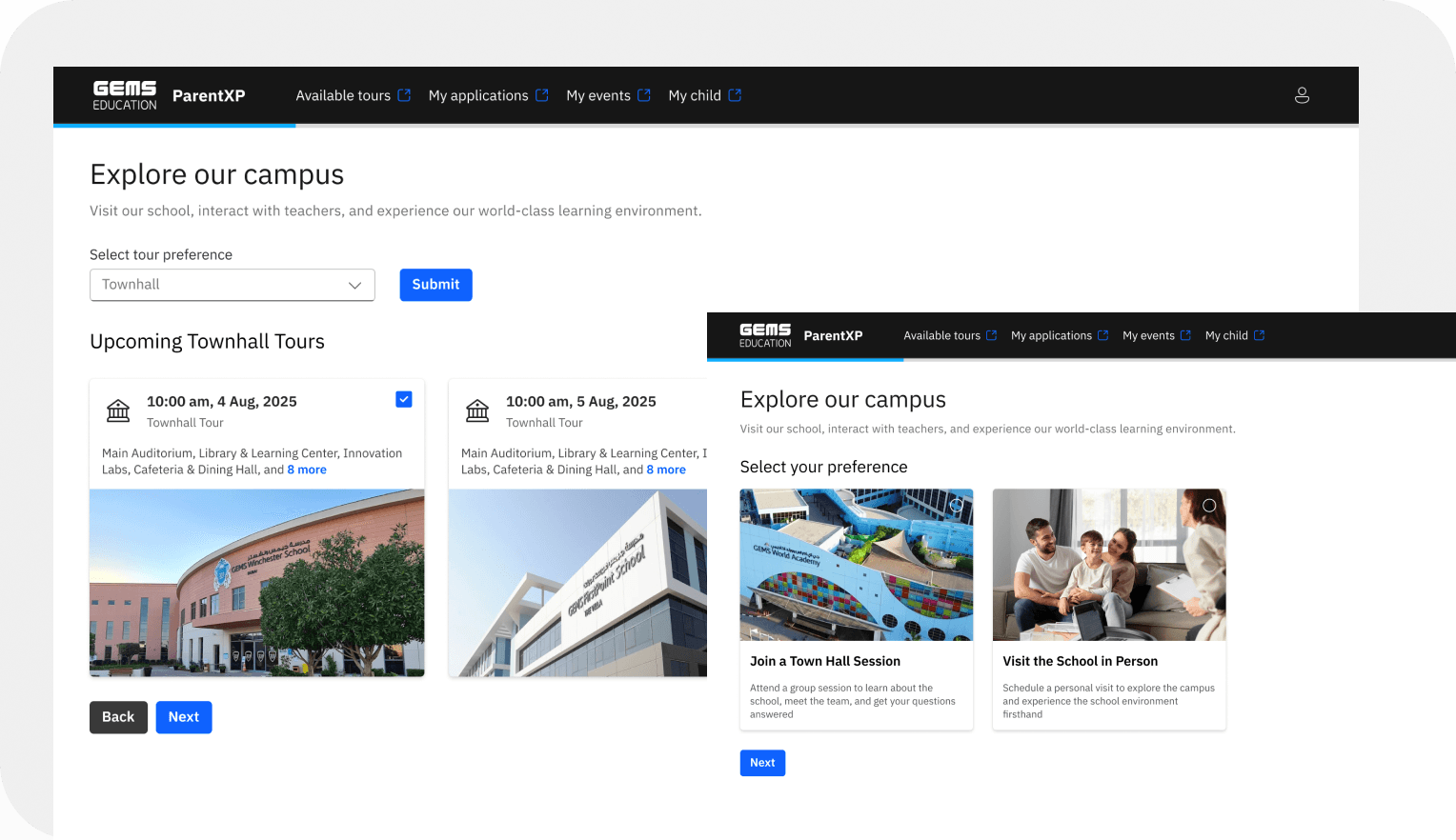
Book a Tour
Trust-building moments were made part of the journey, not separate from it.
Users can book in-person visits or join townhall sessions directly from the flow. That bridges digital exploration with real-world reassurance at the exact moment confidence matters most.
“The experience no longer ends at information. It creates a path toward real contact and trust.”
Step 4
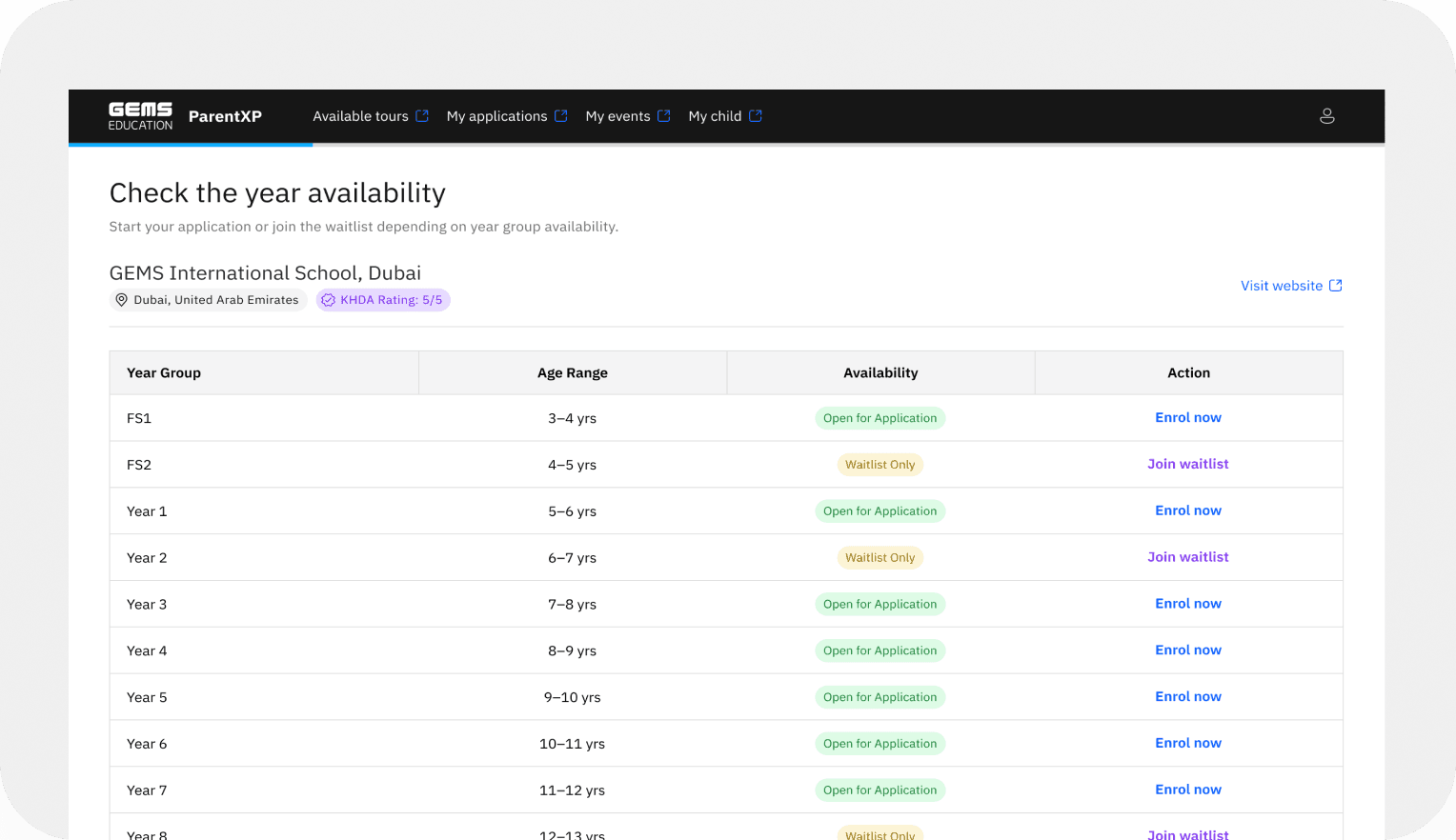
Availability and Waitlist
Availability is surfaced earlier so users can act on reality, not assumptions.
Families can immediately see which year groups are open for application and which ones are waitlist-only. That turns uncertainty into a clear next step before users invest more time in the flow.
“Making availability visible early reduces frustration and keeps expectations aligned.”
Step 5
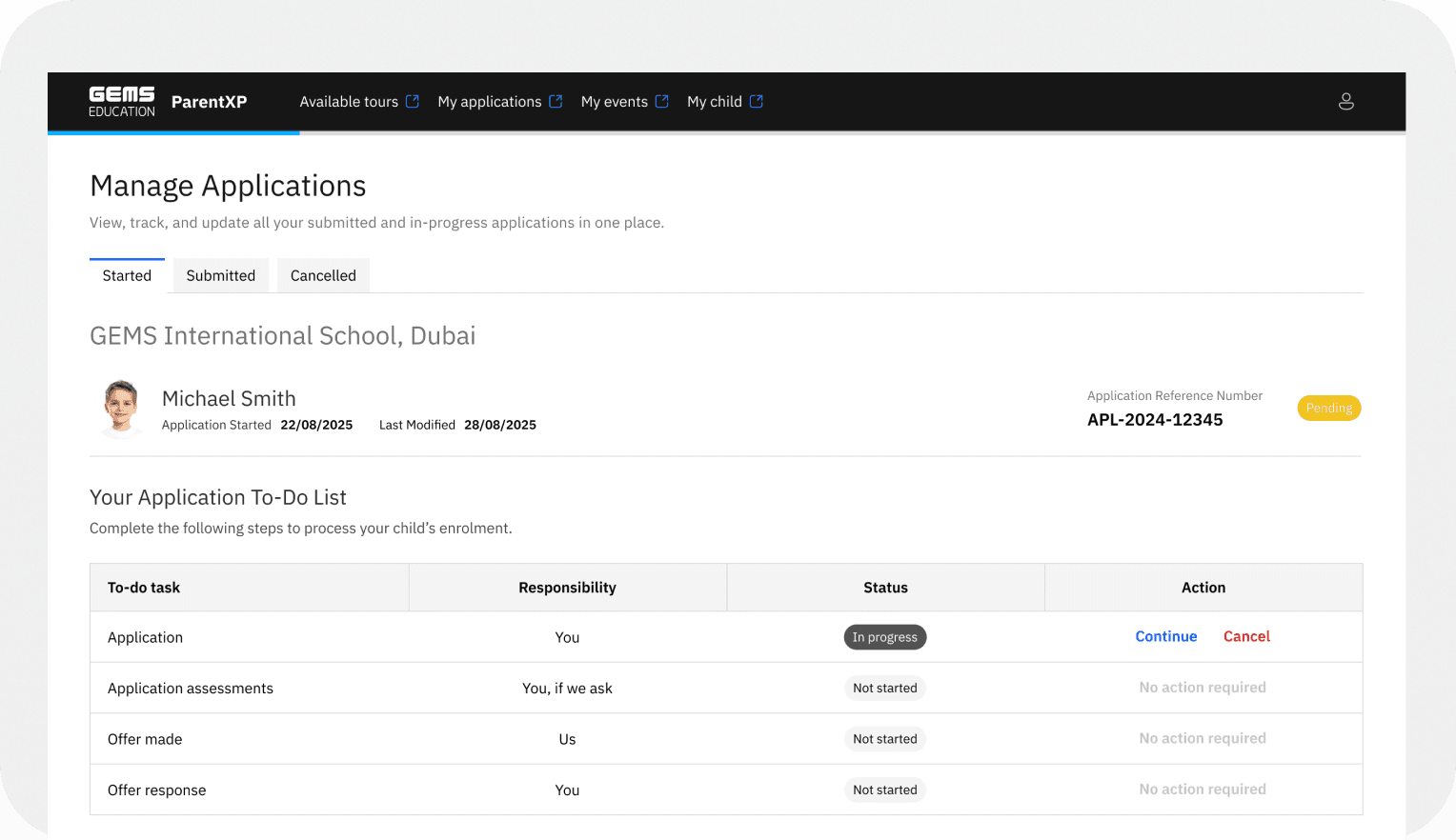
Application Dashboard
A centralized dashboard was introduced to bring clarity back into the process.
Users can track status, review next steps, and manage multiple applications from one place. That visibility reduces uncertainty after submission and makes the journey feel actively managed.
“The dashboard turns a fragmented process into something transparent and easier to trust.”
Step 6
Waitlist System
A waitlist system keeps the journey open even when admissions are full.
Users can still register interest instead of hitting a dead end, while schools continue capturing high-intent leads. This protects both user momentum and business opportunity at the most sensitive drop-off point.
“The waitlist changes a closed door into a softer next step.”
Impact
The redesigned experience led to:
0%
Improved application completion rates
0%
Reduced drop-offs during key stages
0%
Increased engagement in school comparison
0%
Users explored more options before applying, indicating higher decision confidence.
0%
Captured additional high-intent leads through waitlist
Learnings
What I took away from this
Information structure
Structuring information is more impactful than reducing it
Guidance over features
Users need guidance, not just functionality
Decision support matters
Comparison and trust-building moments are critical in high-stakes journeys
Designing for global users
Global enrollment journeys require clarity, flexibility, and scalability